January Wildfire Frequently Asked Questions
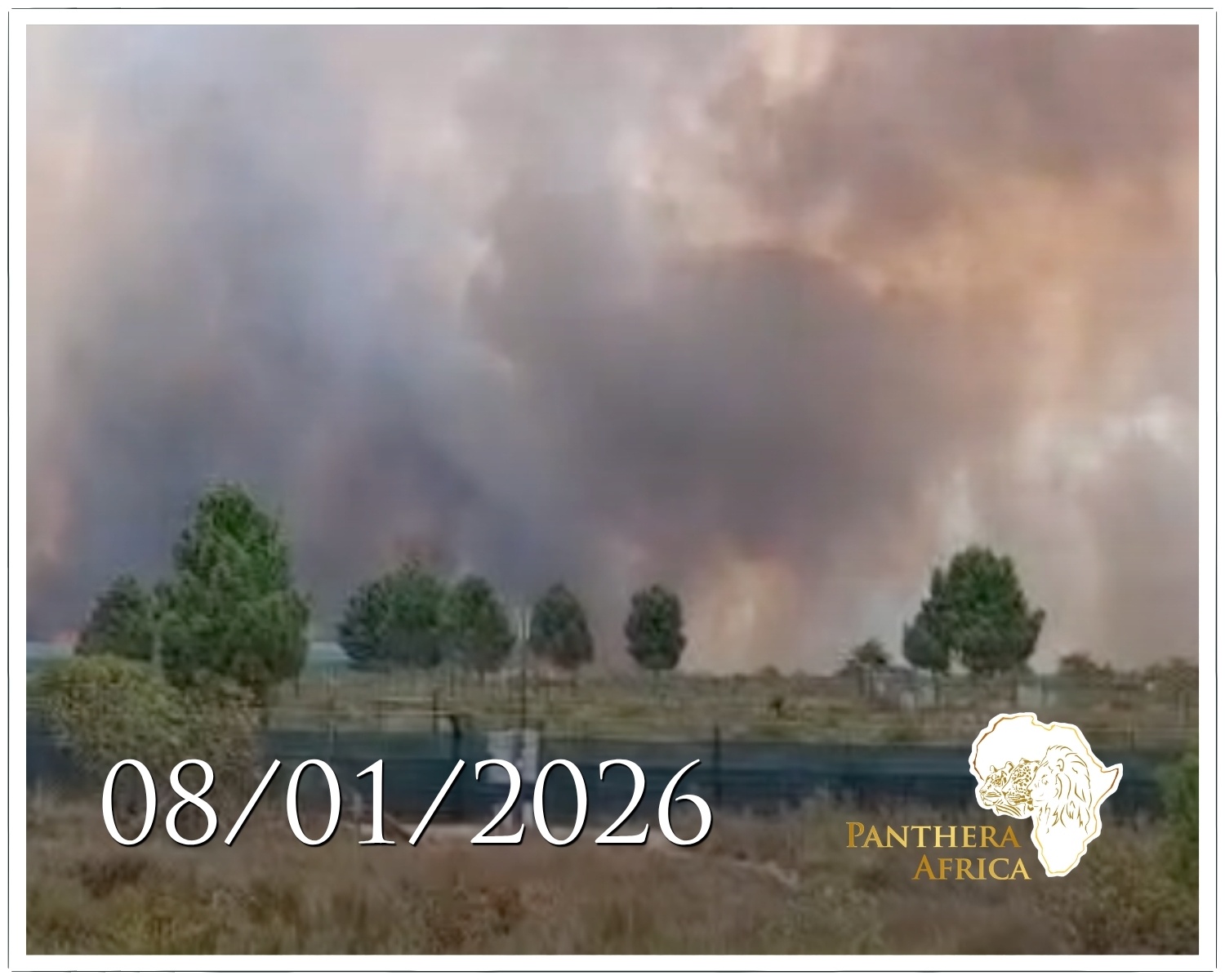
January 2026 – Following the devastating wildfire that swept through Panthera Africa Big Cat Sanctuary on 8 January 2026, we have received many questions from concerned supporters around the world. We have created this frequently asked questions update to explain how we prepared for the risk of wildfire, why the fire was so difficult to contain, where our animals are now and how people can support our recovery.
Was Panthera Africa Equipped to Deal With Wildfires?
Yes. Panthera Africa is situated in a high fire-risk area and had a comprehensive fire prevention and management plan in place long before the wildfire. This included regular firebreak maintenance, the continuous removal of invasive alien and high fire-risk vegetation and extensive on-site firefighting equipment. These measures went beyond recommended standards and formed part of our ongoing responsibility to protect our animals and sanctuary.
Despite this preparation, the extreme conditions caused the wildfire to spread rapidly across Panthera Africa and over 12,000 hectares (approximately 30,000 acres) of surrounding land. The preventative measures we had put in place still made an important difference. Our maintained firebreaks and vegetation-clearing work helped stop the fire, protect parts of our sanctuary and gave our team crucial time to respond.
Why Could the Fire Services Not Stop the Fire?
Strong winds, hot and dry conditions and dense alien vegetation contributed to the rapid spread and intensity of the fire. A Code Red emergency was declared in the area. This is the highest level of alert and placed severe pressure on local firefighting resources. Additional assistance had to be called in from neighbouring municipalities. Firefighters worked tirelessly under extremely dangerous conditions, but the speed, size and intensity of the blaze made it exceptionally difficult to contain. Investigations into the cause of the fires affecting Panthera Africa and the surrounding area are ongoing. This includes an investigation into whether any of the fires may have been deliberately started. No conclusions can be reached until these investigations have been completed.
Are Panthera Africa’s Animals Safe?
Through the courage and dedication of our team, the animals in immediate danger were moved out of harm’s way. Tragically, our beloved tiger Rays did not survive due to the circumstances surrounding the wildfire. Arabella, our tigress, and Baguira, our lioness, sustained serious fire-related injuries and are receiving intensive specialist veterinary care. Their injuries are serious and their recovery will take time, but they are receiving the treatment, monitoring and pain management they need. Most of our animals have been evacuated to trusted partner sanctuaries across South Africa while we assess the damage and begin the recovery process.
Which Animals Remain at Panthera Africa?
Our team continues to care for several animals at the sanctuary. These include Skillie the tortoise, Jasper the serval and his domestic cat companion Tammy, Amy and Gigi the caracals and our domestic animals. They continue to receive the daily care and attention they need while our team manages the immediate impact of the wildfire.
Where Have the Evacuated Animals Been Taken?
Our evacuated animals are receiving expert care from our specialist veterinarian and trusted partner sanctuaries across South Africa:
- ADI Wildlife Sanctuary, Free State: White lionesses Lei-ah and Elsa
- Ashia Cheetah Conservation, Western Cape: Gabriel the spotted leopard and Pardus the black leopard
- Jukani Wildlife Sanctuary, Western Cape: Baguira and servals Lekanya and Kamagelo
- LIONSROCK Big Cat Sanctuary, Free State: Lions Chaka, Oliver, Neptune, Ivana and Karlos
- Old Chapel Veterinary Clinic, Gauteng: Arabella, who remains in intensive care with Dr Peter Caldwell
- Shamwari, Eastern Cape: Servals Balozi and Mahaba and lion Lancelot
- The Lions Foundation, Bela-Bela: Lionesses Zakara and Jade
Relocating so many animals at short notice required emergency permits, specialist transport, veterinary support and secure, species-appropriate enclosures. All our relocated animals are in experienced hands. Some are adapting well, while others are taking longer to settle, which is understandable after such a sudden and significant change. We are deeply grateful to every organisation and individual who responded to our call for help and continues to care for our animals during this crisis.
Why Does Panthera Africa Need Financial Support?
The wildfire caused extensive damage to animal camps, fencing, electrical systems, water infrastructure and other essential parts of the sanctuary. Panthera Africa is temporarily closed. This means we have lost income from educational visits, our International Volunteer Programme and our curio shop while continuing to cover animal care, staff costs, veterinary treatment and emergency recovery work. Insurance will not cover the full cost of the damage, recovery and lost income. Public support is therefore essential to our ability to continue caring for our animals and begin rebuilding their home.
How Can You Help?
There are several ways to support Panthera Africa’s animals and recovery:
- Make a once-off or monthly donation
- Join our Pride for Life Guardianship programme
- Purchase something through our online shop
- Help with an item from our wish list
- Share our story with friends, family and the wider community
Every contribution helps us care for our animals, support our team and our long-term recovery. For fundraising, sponsorship or collaboration enquiries, please contact our Head of Marketing and Fundraising, Taryn (Taz), at marketing@pantheraafrica.com. Thank you for your care, compassion and patience. Your support is helping us continue through one of the most difficult periods in Panthera Africa’s history.
Is Your Name Panthera Africa or Panthera?
Our full name is Panthera Africa Big Cat Sanctuary. We also refer to ourselves as Panthera Africa. We are not the same organisation as the one known simply as Panthera. We are two separate organisations and are not affiliated with one another. Referring to us as Panthera alone can cause confusion.